
From Super 8 to Venice Biennale: The Artistic Evolution of a Contemporary Filmmaker - An Interview with Firouz Farman-Farmaian
Tell us a little about yourself. How did you get interested in cinema, and did you study it academically?
I grew up in a family where cinema and the arts were always part of everyday life. My father had a deep passion for Italian neorealist cinema, so from an early age I was introduced to directors like Rossellini, Fellini and Antonioni. Later, growing up in Paris, I immersed myself in the independent cinema scene and discovered the French New Wave—Godard, Truffaut—and, through them, filmmakers like John Cassavetes. Shadows remains one of the films that influenced me the most. Around the same time, Jim Jarmusch’s Permanent Vacation had a profound impact on me and confirmed my attraction to a more poetic and independent approach to filmmaking.

I didn’t study cinema academically. I studied architecture at the École des Beaux-Arts in Paris, but that’s actually where I began making films. I started shooting experimental Super 8 black-and-white films—very spontaneous and handheld, somewhere between documentary and avant-garde cinema. That naturally led me to direct my first documentary, The Gnawa Trail, a 52-minute ethno-road documentary filmed in Morocco about the Gnawa culture. It was later screened at the Louvre’s Musée des Arts Décoratifs during the Year of Morocco in 2000, and it’s still available on my website today.
I also wrote several feature screenplays, although they never reached production. At the same time, music became an increasingly important part of my life. My band, Playground, received offers from Virgin, but we eventually chose to sign with an independent label, Catalog Records in Montmartre, because it allowed us to preserve our indie vision and creative freedom. Alongside that, I continued developing my practice as a contemporary artist, something I’ve pursued since I was a teenager.
Looking back, I don’t really separate these disciplines. Painting, music and cinema have always informed one another. Today, filmmaking allows me to bring them together into a single artistic language, and PATH is the clearest expression of that journey so far.

Is "PATH" your debut film, or have you made others before it? Where did the initial idea for this documentary come from?
PATH is certainly not my debut film. Before it, I directed several short films, The Gnawa Trail and the The Run of Show, a documentary commissioned during Paris Fashion Week, and throughout my years with my band Playground, I directed many of our music videos. Later, when I moved from the music industry into the contemporary art world, filmmaking naturally evolved into video art. I began integrating moving images, soundscapes and immersive environments into my installations, and eventually founded FORRM, my experimental psychedelic rock ensemble, where music and image became inseparable.
The initial idea for PATH actually started as something completely different. At first, I was simply documenting the evolution of the project on my iPhone. Those first images eventually became Shimmer, an art film that was later integrated into my installation The Gates of Turan for the Venice Biennale.
Around that time, cinematographer Mathieu Vollaire joined the project. Initially, he had hoped to direct a documentary through a Paris production company, but when that didn’t materialize, We Are the Nomads took over the project. Mathieu became Director of Photography, and together we developed what eventually became PATH.

From the beginning, I wanted the film to be much more than a conventional documentary. It was conceived as a multidisciplinary work where cinema, contemporary art and music constantly dialogue with one another. FORRM composed the original score, and even the visual identity of the film grew out of our live performances. During a performance at the Museum of Arts and Design in New York City in December 2025, we performed the soundtrack live while generating AI imagery in real time from my artworks and the film’s visual universe—an experiment that ultimately shaped the graphic language of PATH itself.
In many ways, PATH represents the synthesis of my artistic practice. It blurs the boundaries between documentary, installation, music and visual art while exploring the dialogue between East and West. More than a film, it reflects my belief that contemporary storytelling can transcend traditional artistic disciplines.
Could you explain your creative process a bit? Once you find an idea, do you immediately start researching? Do you prepare a written outline—not necessarily a full script, but perhaps a list of situations—to serve as a road-map?
My creative process is perhaps a little unconventional because I approach filmmaking as a contemporary artist rather than purely as a film director. Every project has its own methodology.
In the case of PATH, the research actually began long before the film itself. It started when I was appointed Cultural Ambassador of the Republic of Kyrgyzstan for the 2022 Venice Biennale. The documentary followed the creation of The Gates of Turan, the installation I was developing for the Biennale. So the research wasn’t driven by filmmaking—it was driven by the artwork itself.
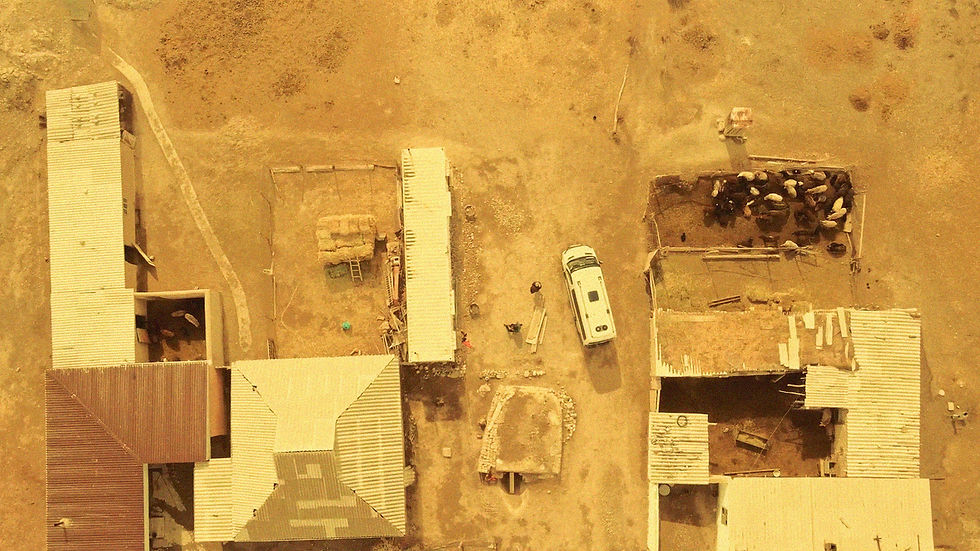
That meant immersing myself in Kyrgyz history, mythology, nomadic culture and traditional craftsmanship. I spent a great deal of time understanding felt-making and textile traditions because they became integral to the installation. As the artistic project evolved, the documentary naturally evolved alongside it, almost as a witness to the creative process.
My next feature film, Season of the Witch, follows a completely different methodology. There, I begin with extensive historical, cultural and anthropological research. The screenplay becomes the backbone of the project, but I continue researching throughout the writing process. I don’t see research and creation as separate stages—they constantly inform one another.
Whether I’m making an installation, a documentary or a feature film, I’m always building a complete artistic universe. Images, music, sound, locations, archives and historical references all develop together. I don’t simply write a script—I create an ecosystem from which the film can emerge organically.
How long did it take to shoot this documentary? What kind of challenges did you face while filming across several different countries?
PATH was a long-term project. I launched The Gates of Turan during the pandemic, but principal photography began in October 2021, when I made my first journey to Kyrgyzstan. Filming continued throughout the development of the project and accompanied it through the Venice Biennale in 2022. Although the Biennale officially concluded at the end of that year, the exhibition’s momentum, follow-up projects and additional filming naturally carried the production well into 2023.
Post-production then became a creative process in its own right and ultimately lasted until 2025. During that time, we composed and recorded the original soundtrack with my band FORRM, developed the film’s experimental graphic identity, and refined the edit. I edited the film myself under the supervision of French producer Boris Vassallo in Marseille, with the guidance of Paris-based American editor and colourist Michael Derrossett.
The greatest challenge was undoubtedly funding. In many ways, the film reflects the same financial and artistic challenges that the project itself was facing, so the production became part of the story. We eventually brought the film to completion thanks to the support and partnership of producer and cultural entrepreneur Ariane Saney, who joined We Are the Nomads as a partner and helped carry the project through to its final stages.
Another challenge was the international nature of the production. PATH unfolds across Kyrgyzstan, France, Spain, London and Dubai, and each location represents a chapter in the journey rather than simply a filming destination. Coordinating artists, institutions and logistics across so many countries required patience and adaptability, but it also became one of the film’s greatest strengths. In many ways, the production itself mirrored the very path the documentary set out to explore

Visually, your documentary is a fascinating blend of different cinematography styles. Could you tell us about the shooting process and the visual strategies you had in mind before production began?
Visually, I’m interested in creating a dialogue between immediacy and contemplation. PATH constantly moves back and forth between cinéma vérité—very intimate, handheld observations of real life—and highly composed, almost epic wide-screen imagery. In that sense, I’m influenced as much by documentary realism as I am by filmmakers like Sergio Leone, using large cinematic landscapes to give space and resonance to the human story.
I also see technology as an artistic tool rather than simply a technical one. I approach filmmaking like an artisan, carefully weaving together cinematography, graphic design, sound, music and, where appropriate, generative AI to create a unified visual language. None of these elements are decorative—they all serve the narrative and emotional rhythm of the film.
My preparation differs depending on whether I’m making a documentary or a fiction film. With documentaries like PATH, I leave much more room for spontaneity and discovery. I carry a notebook everywhere, constantly sketching ideas, writing observations and refining the rhythm of the film as it unfolds.
For fiction, however, my process is far more structured. I draw extensively, produce multiple storyboards, create visual mood boards, edit reference videos and build sound worlds long before shooting begins. By the time we arrive on set, I’ve already developed a complete sensory universe for the film.

Whether it’s documentary or fiction, rhythm remains my compass. More than planning individual shots, I’m always thinking about the emotional journey—how the audience breathes, pauses and moves through the film. Everything else, from camera movement to editing, music and graphic interventions, follows that rhythm.
What led to your decision to use narration in the film?
The narration came quite naturally because I had the privilege of working with someone who is, in many ways, a born storyteller. One of the principal patrons of the Kyrgyz Pavilion was my cousin, Dr. Amir Ali FarmanFarma, a political historian, author and respected cultural producer within the Persian diaspora.
Amir had been involved with the project from its very inception. He helped secure the seed funding for the pavilion through the Flora Family Foundation, and throughout the process he became an intellectual companion, helping shape many of the historical and cultural conversations that underpin the work.
When the time came to find the voice that could bind the film together, he was the obvious choice. I was looking for someone who could be both poetic and historically grounded—someone capable of guiding the audience without imposing on the images. Amir brought exactly that balance, and, I have to admit, he also has a wonderfully cinematic presence on screen.

Structurally, I was inspired by the great oral storytelling traditions of the East, where stories are transmitted through the voice of a narrator. At the same time, I was thinking about films I love, such as The Big Lebowski by the Coen Brothers, where the narrator only fully reveals himself partway through the film. I loved that device and decided to play with it in PATH, allowing Amir’s presence to emerge gradually and become the thread that quietly weaves the entire journey together.
The film constantly moves from one location to another, which in a way evokes the "Hero's Journey" found in fiction cinema. Did you intentionally want to give the film the tone of a long, revelatory voyage?
Absolutely. The mythical structure of the Hero’s Journey has always been central to my storytelling. Although Joseph Campbell brilliantly articulated it in The Power of Myth and inspired filmmakers like George Lucas, these narrative structures have existed for centuries in Eastern literature. As someone of Persian heritage, I naturally think of Ferdowsi’s Shahnameh, where every journey is both physical and spiritual, and every obstacle transforms the character.
Interestingly, although I often end up making documentaries, I’ve always considered myself primarily a fiction filmmaker. My previous feature documentaries—from The Gnawa Trail to The Run of Show and now PATH—have allowed me a level of creative freedom and experimentation that is often harder to achieve in fiction, where production structures are naturally much heavier.
At the same time, my imagination has always been rooted in historical fiction. I’m fascinated by the space where documented reality, mythology and imagination meet. One of my favourite examples is Fellini’s Casanova, which freely reinterprets history through a deeply personal and poetic vision.
So yes, the idea of a long revelatory journey was entirely intentional. But what interested me most was creating a paradox. On one hand, PATH follows an almost mythological narrative structure, echoing the timeless journey of the hero. On the other, it remains deeply rooted in the everyday reality of documentary filmmaking—its uncertainties, imperfections and moments of truth. The tension between these two approaches, between myth and realism, is really the essence of the film.
The relationship established between music and cinema in your film has yielded a very fruitful result. Could you tell us more about this connection?
Music has always been at the heart of my approach to cinema. Long before I made films professionally, I was teaching myself film history while making my first Super 8 shorts. I remember writing a sentence in huge letters on the wall of my tiny apartment in Paris: “The future of image is sound.” That phrase has stayed with me ever since and has guided every one of my cinematic projects.
I believe sound reaches us emotionally before the image does. When a film fades to black but the sound continues, the audience enters an intimate space where imagination takes over. For me, sound doesn’t simply accompany the image—it prepares the emotional ground on which the image can resonate.
I’ve always admired filmmakers who understood this relationship. Quentin Tarantino’s use of music in Reservoir Dogs and Pulp Fiction had a profound influence on me, as did composers like Vangelis for Blade Runner and Chariots of Fire, Nino Rota’s collaborations with Fellini, and Georges Delerue’s score for Le Mépris. In all these works, music becomes another character rather than an illustration.
This philosophy has been present throughout my filmmaking. My first documentary, The Gnawa Trail, explored the musical roots of the Gnawa tradition and its connection to the origins of blues and jazz. Ever since, every film I’ve made has been conceived with music as an integral narrative element from the earliest stages.

Creating FORRM was a natural extension of that philosophy. After years in the music industry, I wanted complete artistic freedom beyond the conventions of record labels, radio formats and three-minute songs. FORRM became a creative laboratory where I could collaborate freely with musicians from different traditions and cultures, exploring sound without commercial constraints.
On PATH, the soundtrack wasn’t written after the film—it grew alongside it. The music shaped the rhythm of the edit, influenced the pacing of scenes and ultimately became one of the emotional foundations of the film.
If I had to summarize my cinematic philosophy in one sentence, it would simply be: “The future of image is sound.” That’s been the guiding principle behind my films for more than twenty-five years.

If you had to define the core theme of the film in a single sentence, what would it be?
If I had to define the core theme of PATH in a single sentence, I would probably borrow from the Tao Te Ching: “The greatest form has no shape
During the making of this documentary, what ideas or scenes did you shoot but ultimately decide to cut in the editing room?
PATH was actually filmed before we truly knew what the film would become. For a long time, we were simply documenting the journey day by day, without a predefined narrative structure. In that sense, the editing process was almost an act of discovery.
Early on, creative differences emerged with the original Paris-based production company. At that point, We Are the Nomads and producer Ariane Saney took over the creative and production direction of the project, allowing us to redefine the film according to the vision I had from the beginning.
I also made a very conscious structural decision. Rather than trying to tell the entire story of the Kyrgyz Pavilion chronologically, I focused on the second half of the adventure—my return to Kyrgyzstan, once the artwork had already been commissioned, the ambassadorship secured and most of the financing assembled. That final journey, leading directly to the opening of the Venice Biennale, gave the film a much stronger dramatic arc and a clear sense of purpose.
We had accumulated nearly 60 terabytes of 4K footage, so naturally an enormous amount was left on the cutting-room floor. But the most important cuts weren’t made for technical reasons—they were philosophical.
I consciously chose not to dwell on conflict, negativity or personal disagreements. Those moments existed, as they do in any ambitious project, but I didn’t feel they were the true subject of the film. Instead, I wanted PATH to remain focused on resilience, creativity and the ability to overcome obstacles through collaboration, imagination and hope.
In the end, the film became not a chronicle of every event that happened, but a reflection of the values I wanted it to embody. Sometimes what you choose not to show is just as important as what you decide to leave on screen.

What would you say is the biggest lesson you learned from making this documentary? On the production side, did you have a large crew?
The greatest lesson PATH taught me is something I had already sensed as a young artist, but the film confirmed completely. In the early 1990s, while I was painting on cardboard and recycled materials as part of the Parisian graffiti scene, I created a work titled Courage Is Not a Machine. I still think that title defines the way I approach both art and life.
I’ve come to believe that uncertainty is not something to fear—it’s one of the greatest creative forces we have. The more certain we are, the less room we leave for surprise, intuition and what I would almost call grace. The magic happens when we allow life itself to enter the work.
Many of the artists I admire understood this instinctively. Whether it’s Basquiat, Keith Haring, de Kooning, Pollock or Cy Twombly, they all embraced accident rather than perfection. And Rumi expressed it beautifully: “The wound is the place where the Light enters you.” That idea has stayed with me throughout my life.
Making a film is ultimately no different from living. You receive experiences as gifts—sometimes joyful, sometimes painful—and gradually integrate them into your own construction. The difference is that filmmaking compresses that process into a concentrated experience. A few years of life become ninety minutes of cinema.
As for the production itself, I’ve always preferred working with small, highly committed teams. I call it “light cavalry” strategy. Rather than building a large hierarchical crew, I surround myself with exceptional collaborators—strong “generals” in their respective fields—people with clear creative vision who can work independently and make decisions without constantly referring back to the centre.

That gives the production agility, flexibility and trust. We can move quickly, adapt to changing circumstances and stay close to the reality we’re filming. I think that approach has become one of the defining characteristics of my work. It’s less about commanding an army than assembling a small group of extraordinary people who all move in the same direction.
What connects you most deeply to this film compared to other subjects? Which of its features are you most satisfied with?
What connects me most deeply to PATH is that it wasn’t born out of a desire to enter the film industry or the entertainment business. I came to cinema from the world of contemporary art, and I still see myself, first and foremost, as a contemporary artist.
What I love about contemporary art is its extraordinary freedom. There are no predefined formats—you invent your own language, your own rules and ultimately your own way of communicating with the world. That spirit has always guided my work, and PATH became a natural extension of that practice.
In fact, that’s why the film is called PATH. One thing simply led to another. I didn’t set out to make this film as a traditional documentary. As the project evolved, and after We Are the Nomads took over the production and creative direction, it became my responsibility to shape and complete it. The film gradually evolved into an extension of my artistic practice rather than a separate cinematic project.
I also realized that cinema could become a bridge—a way of bringing my installations, my music and my ideas to a much wider audience. Today, that journey continues through new projects such as my proposal for the Bukhara Biennale in 2027 and its companion film, SAFAR—which means “journey” in Persian, Turkish, Arabic and several other languages across the region. So PATH wasn’t an end point; it became the beginning of a broader artistic dialogue.
I suppose what interests me most is the interconnectedness between disciplines. I don’t really separate cinema, contemporary art, music or installation—they constantly feed one another.
As for what I’m most satisfied with, I think we succeeded in finding a genuinely organic balance between image, sound, graphic design and narrative. None of those elements dominates the others; they work together as one language. We experimented with several different cuts, both shorter and longer, but I feel the final 2-hour-16-minute version is where the film finally found its natural rhythm and its own voice.
What are the unique challenges of making a feature-length documentary?
For me, the greatest challenge of making a feature-length documentary isn’t necessarily the production—it’s what comes afterwards. The more hybrid and unconventional your film is, the more difficult it becomes to position it within the existing marketplace.
PATH deliberately sits somewhere between documentary, art film and cinematic essay. That freedom is precisely what makes it unique, but it’s also what makes it difficult to classify. At every meeting with distributors, broadcasters or platforms, you hear the same questions: Is it too long? Is it a documentary? Is it an art film? Who is the audience?
From the beginning, I made a conscious decision that the cut and the artistic vision were not negotiable. I didn’t want to reshape the film simply to fit a broadcaster’s slot or a platform’s format. Even highly respected cultural broadcasters such as Arte inevitably ask filmmakers to adapt their work to predefined editorial formats, and I felt PATH needed to remain true to its own language.
Over the past year, with We Are the Nomads, we’ve presented the film at the Berlinale, Cannes and the Venice Film Festival, meeting distributors, sales agents, festival programmers and potential partners. That journey led us to a clear strategy: rather than rushing into distribution, we decided to let the film mature on the international festival circuit.
We’ve been fortunate to receive nominations and selections across a growing number of festivals, culminating in Best Documentary at the Roma Short Film Festival. That recognition has reinforced our belief that Italy, a country with which I have long-standing artistic and creative ties, may well become the natural home for PATH. We’re continuing that dialogue through submissions to Palermo and Turin, and by returning to Venice this September.
So, for me, the greatest challenge of a feature-length hybrid documentary is not making the film—it’s finding the right conduit to my audience without compromising the very qualities that make the work unique. That’s a challenge I’ve been happy to embrace in most of my endeavors.
How did you achieve this specific rhythm during post-production, particularly at the editing table?
The editing process was unconventional. As I mentioned earlier, we didn’t begin with a predefined narrative. We first assembled the rushes chronologically, simply following the journey as it unfolded. The timeline began in February 2022, just a few days before the Russian invasion of Ukraine, and continued all the way to the opening of the Venice Biennale in April 2022 using snippets of rushes dating back to 2021 as mini flashbacks. But the chronological sequence became the backbone of the film.
Once that structure was in place, we almost paused the editing itself. Instead, we spent nearly a year—around eight to ten months—writing and recording the soundtrack with FORRM. At the same time, we developed the graphic language of the film, culminating in the live audiovisual experiments we presented at the Museum of Arts and Design in New York City at the end of 2025.
The final piece was the narration. Once Dr. Amir Ali FarmanFarma’s voice had been recorded at Bill Cox’s Coxinhell Studios in the South of France, I finally had all the elements I needed: the chronology, the music, the graphic design and the narration.
Interestingly, the film didn’t become the film I had imagined. It became the film that naturally emerged from the process. I simply followed the flow and listened to what the material was asking for.
What’s perhaps paradoxical is that, beneath its experimental form, the structure is actually very classical. In the end, I realised I had built the film almost like a Greek tragedy—with a clear progression through Act I, Act II, Act III, Act IV, followed by an epilogue. So while the language of the film is contemporary and hybrid, its dramatic architecture is rooted in one of the oldest storytelling traditions we have. I think that balance between experimentation and classical structure is what ultimately gives PATH its rhythm.

Which documentary filmmakers, directors, or creative artists have had the greatest influence on your work and vision?
Some of my earliest cinematic influences weren’t even traditional films. I grew up watching the independent surf and skateboard films of the 1980s and 1990s, particularly the Powell Peralta documentaries with Steve Caballero. I loved their freedom, their raw camera work.
In documentary cinema, Martin Scorsese’s editing of Woodstock and later his The Last Waltz remain major references for me because they demonstrate how music can become the narrative engine of a film rather than simply its soundtrack. More recently, I was deeply moved by 2000 Meters to Andriivka by Mstyslav Chernov. Its combination of body-camera footage, immersive sound and aerial cinematography creates an extraordinary emotional experience.
But my greatest cinematic influences probably come from fiction. Rossellini, Fellini and Antonioni gave me a philosophical understanding of cinema. Godard, Truffaut, Cassavetes and Jim Jarmusch taught me that the boundary between reality and fiction can become incredibly fertile. Sergio Leone’s sense of scale, Vittorio Storaro’s cinematography in Apocalypse Now, and Wong Kar-wai’s visual poetry—especially during the period of Ashes of Time and Fallen Angels—have all stayed with me.
Beyond cinema, I have enormous admiration for artists who move freely between disciplines. Julian Schnabel and Steve McQueen showed that contemporary art and cinema can enrich one another without compromise. From Iran, Abbas Kiarostami and Jafar Panahi have been particularly important to me. If I feel close to one, it’s perhaps Kiarostami for his poetic minimalism, while Panahi’s human realism has moved me to tears.
My work is probably an attempt to bring all of these worlds together—documentary and fiction, Eastern and Western storytelling, contemporary art and cinema, music and image—into a an elevating language.
Do you consider yourself a filmmaker who cannot work under compromise?
I believe compromises should happen during the preparation of a project, not while you’re creating it. My grandfather, who was a renowned architect in Iran, used to say, “Even in the palace of a king, you have to put a toilet by the entrance.” In other words, practicality must be built into the design from the beginning. Once the vision is established, however, I believe it deserves to be protected.
That’s where I probably differ from many experimental filmmakers. I don’t see myself as an experimental filmmaker for experimentation’s sake. My responsibility is always to the audience. When someone sits down to watch one of my films, they’re placing their trust in me. They’re allowing me to guide their emotions for two hours, and I take that responsibility seriously. My ambition is not to challenge them through discomfort alone, but to take them on a meaningful and rewarding journey.
That’s also why I’ve often chosen to produce my own films. It isn’t about control for its own sake; it’s about preserving the integrity of the work. Inevitably, that leads to difficult conversations with the industry, because the logic of production and the logic of artistic creation are not always the same. I have enormous respect for producers—they make films possible—but I also believe artists must protect the freedom that gives a work its identity.
I was reminded of that recently while watching Hearts of Darkness, the documentary about the making of Apocalypse Now. At the end, Francis Ford Coppola says he dreams of a future where someone, somewhere in the world, picks up a small camera and creates something extraordinary—not because they’re part of the film industry, but because they have something to express.
I still see cinema first and foremost as an art form. Like Picasso, who said that his lifelong ambition was to recover the vision of a child, I believe the challenge is to remain open, curious and fearless. Professionalism is important, but it should never come at the expense of imagination.
What are your plans for the future, and if possible, could you tell us a bit about your next project?
Looking back, I think PATH gave me the confidence to finally direct the feature film I had been carrying with me for more than twenty-five years.
Before PATH, I had already written two feature screenplays, COSMOS and Future Conversations, neither of which ultimately reached production. COSMOS, a Paris-set story I developed in the 1990s, even led me to shoot a series of pilot scenes with my longtime collaborator, cinematographer Laurent Tangy, who has since become one of France’s leading directors of photography. Laurent and I also made The Gnawa Trail together, and throughout the years we always shared the belief that one day we would return to feature filmmaking.
Ironically, the seed of my next feature, Season of the Witch, was planted during the making of The Gnawa Trail. As we travelled across Morocco in an old Renault 4, following the routes of the Gnawa culture, the first ideas and treatment for the screenplay began to emerge. The project then entered a kind of twenty-five-year gestation. I put the notes aside while pursuing music and contemporary art, but they never really left me.
It was through the journey of PATH—meeting producers, distributors and festival programmers in New York, Berlin, Cannes and Venice—that I returned to the screenplay. During countless flights across the Atlantic, I completed new drafts, and the project gradually attracted an extraordinary group of collaborators.
French-Moroccan producer Aisha AbouZied joined during the earliest stages of development and helped launch the first phase of pre-production. Later, following my exhibition at the Venice Architecture Biennale, held during the Venice International Film Festival (Mostra) at Palazzo Dandolo in September 2025, I met Atilla Salih Yücer, who came on board as delegated producer. After PATH’s premiere screening at the Berlinale in February 2026, we met Adva Avichzer, who joined the project as Executive Producer and helped us structure the international financing strategy.

My longtime friendship with casting director Juliette Ménager helped shape the casting philosophy from the outset. Producer Étienne Druihle joined the project as our advising line producer, while Hind Ghazali, our set designer, helped us develop a grounded and realistic approach to the production design, deeply rooted in the architecture and atmosphere of Morocco.
Most recently, Jean-David Lefebvre, who served as First Assistant Director to Bernardo Bertolucci on Last Tango in Paris, joined the project as our Moroccan Executive Producer. Seeing such remarkable collaborators gather around Season of the Witch has been one of the most rewarding aspects of the journey and gives me great confidence as we move towards production.
At the same time, the commitment of actors from the exciting new generation of French cinema, such as Khalil Ben Gharbia and Jules Benchetrit, together with the interest shown by actresses such as Alma Jodorowsky, has reinforced our belief in the project and given it a wonderful creative momentum. Watching this remarkable group of artists come together around a screenplay that has been in gestation for more than twenty-five years is both humbling and deeply inspiring.
Today, Season of the Witch is our principal focus. We’re in the final stages of financing, with roughly half of the budget secured, and we’re preparing to shoot this winter.
Alongside cinema, my contemporary art practice continues to evolve. This August, I’ll present Magazzino, a pop-up exhibition in Tribeca at Salomon Arts Gallery, bringing together a curated selection of works spanning different periods of my career.

Looking further ahead, my major artistic focus after Season of the Witch will be the Bukhara Biennale 2027, where I hope to continue the dialogue initiated by PATH through a new installation and a companion film entitled SAFAR, which means journey in Persian, Turkish, Arabic and several other languages across the region.
Ultimately, I don’t see these as separate projects. They are all interconnected. Cinema feeds my contemporary art, music inspires my films, installations generate new stories, and every project naturally opens the door to the next. I don’t really think in terms of individual works anymore—I think in terms of one continuous artistic journey.


Comments